

ABA Therapy for Speech Delay: Help Your Toddler Communicate
These skills are often connected to Verbal Behavior Therapy, an ABA approach that focuses on language as the child uses it. For example, a word is not only important because a child can say it. It is important because the child can use it to ask for something, respond to someone, share attention, or participate in a routine.
For toddlers, this work is usually most meaningful when it happens during natural, motivating moments: playtime, snack time, getting dressed, bath time, or reading a favorite book.
What Research Suggests About ABA for Language Development
Many parents want to know whether ABA therapy for speech delay is supported by research. That is a fair and important question.
Research by the American Academy of Pediatrics on early behavioral intervention suggests that some young children with autism and developmental delays can make gains in language, communication, adaptive skills, and learning when therapy is individualized, consistent, and started early. However, it is also important to say this clearly: no therapy works the same way for every child, and progress can look different from one toddler to another.
Some children may begin using more words. Others may first make progress by pointing, exchanging pictures, using signs, responding more often, making choices, or showing fewer frustration-based behaviors because they have another way to communicate.
Studies on ABA-based language interventions often use tools such as the VB-MAPP and ABLLS-R to measure communication and learning milestones. These tools can help clinicians understand where a child is starting, what skills are emerging, and what should be taught next.
What parents can take from the research is practical: ABA for language development may be most helpful when it is individualized, developmentally appropriate, family-centered, and adjusted to the child’s response. The focus should not be on rushing a child. It should focus on building communication that is useful, respectful, and meaningful in real life.

How Does ABA Therapy Help Toddlers Communicate?
Some toddlers with autism are nonverbal or minimally verbal. For parents, this can bring a very specific kind of worry. You may wonder whether your child is trying to communicate, and you are missing it. You may also wonder whether using pictures, gestures, or a device will make speech less likely to occur.
A compassionate ABA provider should explain this carefully: communication support does not mean giving up on speech. For many children, alternative ways to communicate can reduce frustration and create a bridge toward more interaction.
ABA therapy for speech delay may include Augmentative and Alternative Communication (AAC). AAC can include picture exchange systems, visual supports, signs, communication boards, or speech-generating devices.
For a toddler who cannot yet say “juice,” handing over a picture, pointing to an icon, or using a simple sign can be a meaningful step. It teaches the child, “When I communicate, people understand me.” That lesson matters.
So, if you are wondering: “How does ABA therapy help toddlers communicate?”, for nonverbal or minimally verbal toddlers, ABA therapy may support communication by:
- Helping the child request preferred items or activities
- Teaching the child to make choices
- Encouraging gestures, sounds, pictures, or device use
- Reinforcing communication attempts
- Gradually building independence by fading prompts
The goal is not to make every child communicate in the same way. The goal is to give each child a reliable way to be understood.
How Parents Can Support ABA Programs at Home
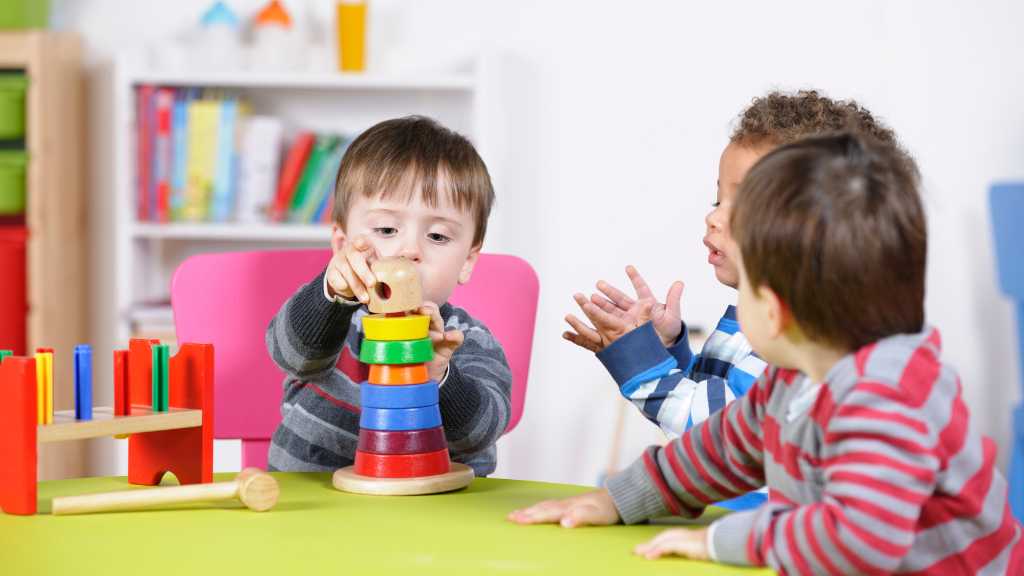
ABA therapy for speech delay should not feel like something that only happens in a clinic or therapy room. Toddlers learn through repetition, relationships, and daily routines. That means parents and caregivers are essential to the process.
A BCBA or ABA therapist may help parents learn how to notice communication attempts that are easy to miss. A reach, a sound, a glance, a tug on your shirt, or a repeated movement may all be a child’s way of trying to say something.
Parent support may include learning how to:
- Pause and give your child a chance to communicate
- Offer simple choices during everyday routines
- Use consistent words, gestures, or visuals
- Respond warmly to communication attempts
- Create small opportunities for requesting during play, meals, or dressing
- Reinforce communication in the moment
This does not mean parents need to become therapists at home. It means families can learn small, practical strategies that make communication easier throughout the day.
For example, instead of anticipating every need right away, a parent may pause before giving a favorite snack. That small pause gives the child an opportunity to point, reach, vocalize, sign, use a picture, or attempt a word. When the parent responds, the child begins to learn that communication works.


